- <a href="https://library.nhrc.or.th/th" aria-label="home" class="mainMenu"> <em class="fas fa-home"></em> </a>
-
เกี่ยวกับเรา
ย้อนกลับ เกี่ยวกับเรา<a href="https://library.nhrc.or.th/th/history" aria-label="menu" class="submenu-list" target="_self"> ความเป็นมา </a> <a href="https://library.nhrc.or.th/th/structure" aria-label="menu" class="submenu-list" target="_self"> โครงสร้าง </a> <a href="https://library.nhrc.or.th/th/vision" aria-label="menu" class="submenu-list" target="_self"> วิสัยทัศน์/พันธกิจ </a> <a href="https://library.nhrc.or.th/th/award" aria-label="menu" class="submenu-list" target="_self"> รางวัล </a> <a href="https://library.nhrc.or.th/th/announce" aria-label="menu" class="submenu-list" target="_self"> ระเบียบ/ประกาศ </a> นโยบายองค์กรอัลบั้มภาพ<a href="https://library.nhrc.or.th/th/website-policy" aria-label="menu" class="submenu-list"> นโยบายเว็บไซต์ </a> <a href="https://library.nhrc.or.th/th/website-security-policy" aria-label="menu" class="submenu-list"> นโยบายการรักษาความมั่นคงปลอดภัยเว็บไซต์ </a> <a href="https://library.nhrc.or.th/th/personal-information-protection-policy" aria-label="menu" class="submenu-list"> นโยบายการคุ้มครองข้อมูลส่วนบุคคล </a> <a href="https://library.nhrc.or.th/th/privacy-policies" aria-label="menu" class="submenu-list"> นโยบายความเป็นส่วนตัว </a> <a href="https://library.nhrc.or.th/th/terms-of-service" aria-label="menu" class="submenu-list"> เงื่อนไขการใช้บริการ </a> <a href="https://library.nhrc.or.th/th/cookies-policy" aria-label="menu" class="submenu-list"> นโยบายคุกกี้ </a><a href="https://library.nhrc.or.th/th/album-image" aria-label="menu" class="submenu-list"> อัลบั้มภาพ </a> <a href="https://library.nhrc.or.th/th/gallery360" aria-label="menu" class="submenu-list"> ภาพ 360° </a>
-
บริการ
ย้อนกลับ บริการ<a href="https://library.nhrc.or.th/th/borrow-and-return" aria-label="menu" class="submenu-list" target="_self"> การยืม-คืน </a> <a href="https://library.nhrc.or.th/th/service" aria-label="menu" class="submenu-list" target="_self"> บริการทั้งหมด </a> <a href="https://library.nhrc.or.th/th/flow-service" aria-label="menu" class="submenu-list" target="_self"> ขั้นตอนการใช้บริการ </a> <a href="https://library.nhrc.or.th/th/imfortable" aria-label="menu" class="submenu-list" target="_self"> สิ่งอำนวยความสะดวก </a> แบบฟอร์มบริการ<a href="https://forms.gle/kFvvmB3eMbtTybpn8" aria-label="menu" class="submenu-list" target="_blank"> ประเมินความพึงพอใจ </a> <a href="https://library.nhrc.or.th/th/event" aria-label="menu" class="submenu-list" target="_self"> กิจกรรม </a> <a href="https://library.nhrc.or.th/th/plan" aria-label="menu" class="submenu-list" target="_self"> แนะนำพื้นที่ </a><a href="https://library.nhrc.or.th/th/form-search" aria-label="menu" class="submenu-list"> แบบฟอร์มบริการค้นหาสารสนเทศ </a> <a href="https://library.nhrc.or.th/th/form-suggestions" aria-label="menu" class="submenu-list"> แบบฟอร์มแนะนำทรัพยากรสารสนเทศ </a>
-
แหล่งสารสนเทศ
ย้อนกลับ แหล่งสารสนเทศ<a href="https://library.nhrc.or.th/th/search?ctrl=kw&searchopt=&type=place&keyword=14" aria-label="menu" class="submenu-list" target="_self"> สิ่งพิมพ์สำนักงาน กสม. </a> <a href="https://library.nhrc.or.th/th/search" aria-label="menu" class="submenu-list" target="_self"> ทรัพยากรสารสนเทศทั้งหมด </a> สารสนเทศด้านสิทธิมนุษยชน<a href="https://library.nhrc.or.th/th/network" aria-label="menu" class="submenu-list" target="_self"> เครือข่ายความร่วมมือระหว่างห้องสมุด </a> <a href="https://library.nhrc.or.th/th/dictionary" aria-label="menu" class="submenu-list" target="_self"> พจนานุกรมศัพท์สิทธิมนุษยชน </a> <a href="https://library.nhrc.or.th/th/sourceresearch" aria-label="menu" class="submenu-list" target="_self"> ฐานข้อมูลงานวิจัย/วิทยานิพนธ์ </a> <a href="https://www.tci-thaijo.org/" aria-label="menu" class="submenu-list" target="_blank"> ฐานข้อมูลวารสารอิเล็กทรอนิกส์ (ThaiJO) </a> <a href="https://ncx.dataxet.co/" aria-label="menu" class="submenu-list" target="_blank"> ฐานข้อมูลข่าวออนไลน์ </a> <a href="https://lms.nhrc.or.th/Document/Manual/APA_NHRC.pdf" aria-label="menu" class="submenu-list" target="_blank"> คู่มือการเขียนอ้างอิงทางวิชาการ </a><a href="https://library.nhrc.or.th/th/law-of-human-rights" aria-label="menu" class="submenu-list"> กฎหมายด้านสิทธิมนุษยชน </a> <a href="https://library.nhrc.or.th/th/international-human-rights" aria-label="menu" class="submenu-list"> สิทธิมนุษยชนระหว่างประเทศ </a> <a href="https://library.nhrc.or.th/th/international-human-rights-treaties" aria-label="menu" class="submenu-list"> พันธกรณีระหว่างประเทศ </a> <a href="https://library.nhrc.or.th/th/national-human-rights-commissions" aria-label="menu" class="submenu-list"> สถาบันสิทธิมนุษยชนแห่งชาติ </a> <a href="https://library.nhrc.or.th/th/judgment" aria-label="menu" class="submenu-list"> คำพิพากษาของศาล </a> <a href="https://library.nhrc.or.th/th/human-rights-online-resources" aria-label="menu" class="submenu-list"> แหล่งสารสนเทศด้านสิทธิมนุษยชน </a> <a href="https://library.nhrc.or.th/th/un-and-affiliated-agencies" aria-label="menu" class="submenu-list"> กองทุนและโครงการของสหประชาชาติ </a>
-
สถิติ
ย้อนกลับ สถิติ<a href="https://library.nhrc.or.th/th/statistic/1" aria-label="menu" class="submenu-list" target="_self"> การเข้าใช้บริการ </a> <a href="https://library.nhrc.or.th/th/statistic/2" aria-label="menu" class="submenu-list" target="_self"> การยืมทรัพยากรสารสนเทศ </a> <a href="https://library.nhrc.or.th/th/statistic/3" aria-label="menu" class="submenu-list" target="_self"> บริการตอบคำถามและช่วยการค้นคว้า </a> <a href="https://library.nhrc.or.th/th/statistic/4" aria-label="menu" class="submenu-list" target="_self"> จำนวนทรัพยากรสารสนเทศ </a> <a href="https://library.nhrc.or.th/th/statistic/5" aria-label="menu" class="submenu-list" target="_self"> จำนวนผู้เยี่ยมชมและศึกษาดูงาน </a> <a href="https://library.nhrc.or.th/th/statistic/6" aria-label="menu" class="submenu-list" target="_self"> การใช้งานผ่านเว็บไซต์ </a> <a href="https://library.nhrc.or.th/th/statistic/7" aria-label="menu" class="submenu-list" target="_self"> รายงานผลการปฎิบัติงานฯ </a>
-
ติดต่อเรา
ย้อนกลับ ติดต่อเรา<a href="https://library.nhrc.or.th/th/faq" aria-label="menu" class="submenu-list" target="_self"> คำถามที่พบบ่อย </a> <a href="https://library.nhrc.or.th/th/opening-hours-close-calendar" aria-label="menu" class="submenu-list" target="_self"> เวลาทำการ/ปฏิทินวันหยุด </a> <a href="https://library.nhrc.or.th/th/contacts-us" aria-label="menu" class="submenu-list" target="_self"> ติดต่อเรา </a>
-
สมาชิก
ย้อนกลับ สมาชิก<a href="https://library.nhrc.or.th/th/membership-application" aria-label="menu" class="submenu-list" target="_self"> สมัครสมาชิก </a> <a href="https://library.nhrc.or.th/th/member/login" aria-label="menu" class="submenu-list" target="_self"> ระบบสมาชิก </a>
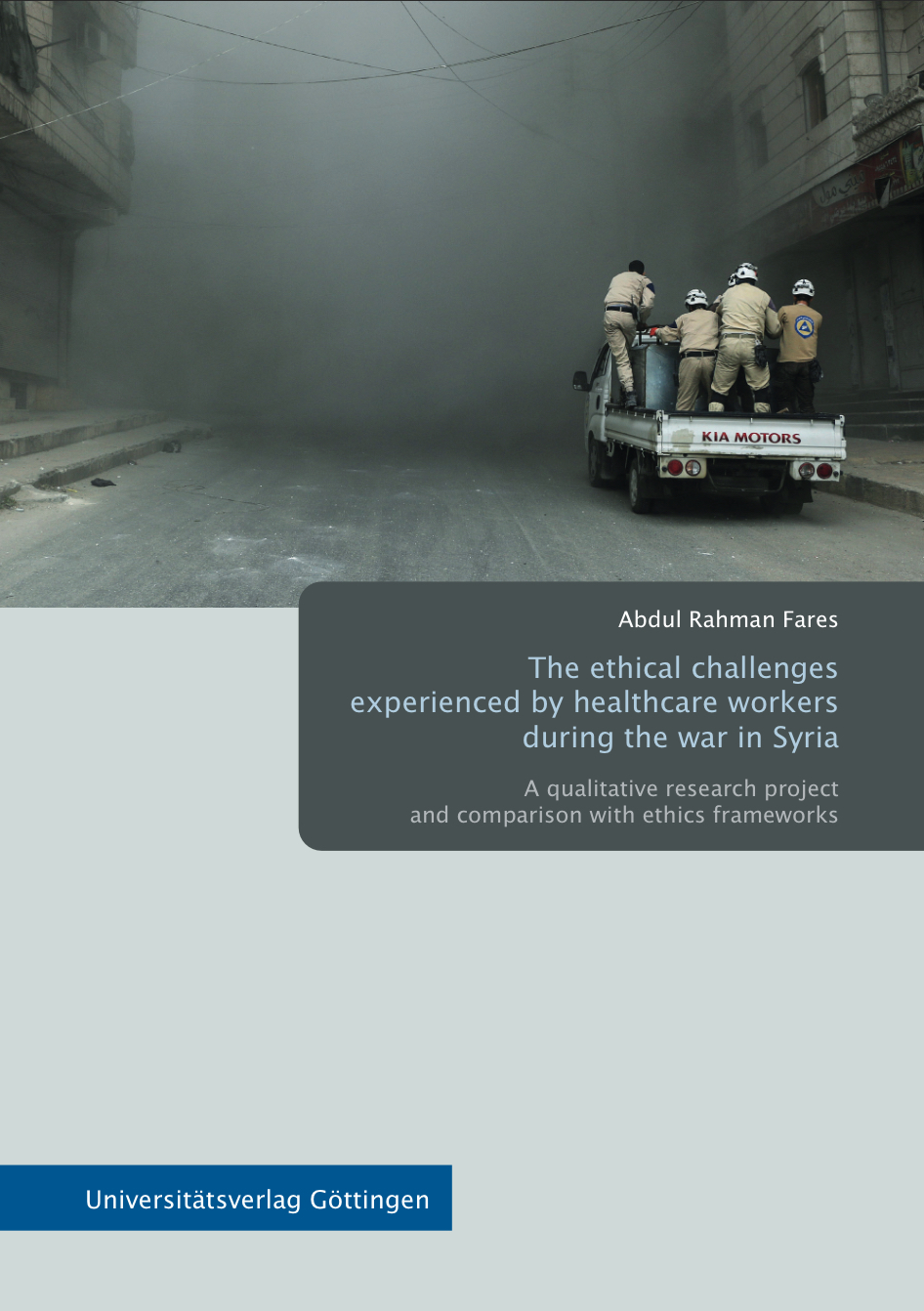
The ethical challenges experienced by healthcare workers during the war in Syria : A qualitative research project and comparison with ethics frameworks
| ประเภท | เลขเรียก | สถานที่ | สถานะ | |
|
E-BOOK |
อีบุ๊ก (E-BOOKS) |
| ISBN |
9783863955908 (e-book)
|
| เลขเรียก |
E-BOOK
|
| ผู้แต่ง | |
| ชื่อเรื่อง |
The ethical challenges experienced by healthcare workers during the war in Syria : A qualitative research project and comparison with ethics frameworks/ Abdul Rahman Fares
|
| พิมพ์ลักษณ์ |
Germany : Universitätsverlag Göttingen, 2023
|
| ลักษณะทางกายภาพ |
xv, 158 p. : ill., c30 cm.
|
| หมายเหตุ |
The war in Syria has lasted for many years and continues to cast a dark shadow over its people, including healthcare workers caring for those injured and in distress. During the war, healthcare workers have been exposed to unprecedented challenges, becoming targets of bombing, killing, siege, arrest, and torture. Moreover, healthcare workers continue to experience difficult situations that require them to make decisions with no clear or easy moral choice. The present study aimed to understand the experiences of healthcare workers and the difficulties and challenges that hinder applying existing ethical frameworks and codes for disasters within Syria’s context of revolution and war. Qualitative analysis of interviews led to classification of the ethical challenges experienced by healthcare workers into four groups: the risks from providing care; stewardship of resources and work challenges; corruption and organizational pressure; and psychological, emotional, and social stress. The study also showed that both Syrian healthcare workers and the developers of ethical frameworks adopt many similar values and principles. Yet, the participants adopted several unique moral values not identified in ethical frameworks as a result of navigating their professional duties under the circumstances of the Syrian war. At last, recognizing the challenges and precarious tasks healthcare workers cope with during wars and other similar disasters could help volunteers, medical personnel, and humanitarian organizations deciding to work in Syria better understand the specific context and obstacles for ethical decision-making. Moreover, attracting attention for and support of Syrian healthcare workers locally and globally presents a long-lasting benefit.
|
| หัวเรื่อง | |
| หัวเรื่อง | |
| หัวเรื่อง | |
| หัวเรื่อง | |
| หัวเรื่อง | |
| เชื่อมโยง |
| LEADER : 00000nab 2200000uu 4500 |
| 001 14368 |
| 003 NHRC |
| 008 250721s2023||||ger0000engd |
| 020 ^a9783863955908 (e-book) |
| 099 ^aE-BOOK |
| 100 1 ^aFares, Abdul Rahman |
| 245 00^aThe ethical challenges experienced by healthcare workers during the war in Syria :^bA qualitative research project and comparison with ethics frameworks/^cAbdul Rahman Fares |
| 260 ^aGermany :^bUniversitätsverlag Göttingen,^c2023 |
| 300 ^axv, 158 p. :^bill., c30 cm. |
| 520 ^aThe war in Syria has lasted for many years and continues to cast a dark shadow over its people, including healthcare workers caring for those injured and in distress. During the war, healthcare workers have been exposed to unprecedented challenges, becoming targets of bombing, killing, siege, arrest, and torture. Moreover, healthcare workers continue to experience difficult situations that require them to make decisions with no clear or easy moral choice. The present study aimed to understand the experiences of healthcare workers and the difficulties and challenges that hinder applying existing ethical frameworks and codes for disasters within Syria’s context of revolution and war. Qualitative analysis of interviews led to classification of the ethical challenges experienced by healthcare workers into four groups: the risks from providing care; stewardship of resources and work challenges; corruption and organizational pressure; and psychological, emotional, and social stress. The study also showed that both Syrian healthcare workers and the developers of ethical frameworks adopt many similar values and principles. Yet, the participants adopted several unique moral values not identified in ethical frameworks as a result of navigating their professional duties under the circumstances of the Syrian war. At last, recognizing the challenges and precarious tasks healthcare workers cope with during wars and other similar disasters could help volunteers, medical personnel, and humanitarian organizations deciding to work in Syria better understand the specific context and obstacles for ethical decision-making. Moreover, attracting attention for and support of Syrian healthcare workers locally and globally presents a long-lasting benefit. |
|
650 0^aMedical care 650 0^aWar^zSyria 650 0^aMedical care.^zSyria 650 0^aHealth Services Administration 650 0^aMedical ethics. |
|
653 0^aE-BOOKS 653 ^aNew Arrivals 9-2025 |
| 856 40^zE-BOOK^uhttps://library.oapen.org/viewer/web/viewer.html?file=/bitstream/handle/20.500.12657/76571/fares_thesis.pdf?sequence=1&isAllowed=y |
| 917 ^aGift :^c200 |
| 955 ^aE-BOOK |
| 999 ^anopparat |
ก่อนเพิ่มแท็กหรือแสดงความคิดเห็น