- <a href="https://library.nhrc.or.th/th" aria-label="home" class="mainMenu"> <em class="fas fa-home"></em> </a>
-
เกี่ยวกับเรา
ย้อนกลับ เกี่ยวกับเรา<a href="https://library.nhrc.or.th/th/history" aria-label="menu" class="submenu-list" target="_self"> ความเป็นมา </a> <a href="https://library.nhrc.or.th/th/structure" aria-label="menu" class="submenu-list" target="_self"> โครงสร้าง </a> <a href="https://library.nhrc.or.th/th/vision" aria-label="menu" class="submenu-list" target="_self"> วิสัยทัศน์/พันธกิจ </a> <a href="https://library.nhrc.or.th/th/award" aria-label="menu" class="submenu-list" target="_self"> รางวัล </a> <a href="https://library.nhrc.or.th/th/announce" aria-label="menu" class="submenu-list" target="_self"> ระเบียบ/ประกาศ </a> นโยบายองค์กรอัลบั้มภาพ<a href="https://library.nhrc.or.th/th/website-policy" aria-label="menu" class="submenu-list"> นโยบายเว็บไซต์ </a> <a href="https://library.nhrc.or.th/th/website-security-policy" aria-label="menu" class="submenu-list"> นโยบายการรักษาความมั่นคงปลอดภัยเว็บไซต์ </a> <a href="https://library.nhrc.or.th/th/personal-information-protection-policy" aria-label="menu" class="submenu-list"> นโยบายการคุ้มครองข้อมูลส่วนบุคคล </a> <a href="https://library.nhrc.or.th/th/privacy-policies" aria-label="menu" class="submenu-list"> นโยบายความเป็นส่วนตัว </a> <a href="https://library.nhrc.or.th/th/terms-of-service" aria-label="menu" class="submenu-list"> เงื่อนไขการใช้บริการ </a> <a href="https://library.nhrc.or.th/th/cookies-policy" aria-label="menu" class="submenu-list"> นโยบายคุกกี้ </a><a href="https://library.nhrc.or.th/th/album-image" aria-label="menu" class="submenu-list"> อัลบั้มภาพ </a> <a href="https://library.nhrc.or.th/th/gallery360" aria-label="menu" class="submenu-list"> ภาพ 360° </a>
-
บริการ
ย้อนกลับ บริการ<a href="https://library.nhrc.or.th/th/borrow-and-return" aria-label="menu" class="submenu-list" target="_self"> การยืม-คืน </a> <a href="https://library.nhrc.or.th/th/service" aria-label="menu" class="submenu-list" target="_self"> บริการทั้งหมด </a> <a href="https://library.nhrc.or.th/th/flow-service" aria-label="menu" class="submenu-list" target="_self"> ขั้นตอนการใช้บริการ </a> <a href="https://library.nhrc.or.th/th/imfortable" aria-label="menu" class="submenu-list" target="_self"> สิ่งอำนวยความสะดวก </a> แบบฟอร์มบริการ<a href="https://forms.gle/DRx8yF1RbcdJBM5S8" aria-label="menu" class="submenu-list" target="_blank"> ประเมินความพึงพอใจ </a> <a href="https://library.nhrc.or.th/th/event" aria-label="menu" class="submenu-list" target="_self"> กิจกรรม </a> <a href="https://library.nhrc.or.th/th/plan" aria-label="menu" class="submenu-list" target="_self"> แนะนำพื้นที่ </a><a href="https://library.nhrc.or.th/th/form-search" aria-label="menu" class="submenu-list"> แบบฟอร์มบริการค้นหาสารสนเทศ </a> <a href="https://library.nhrc.or.th/th/form-suggestions" aria-label="menu" class="submenu-list"> แบบฟอร์มแนะนำทรัพยากรสารสนเทศ </a>
-
แหล่งสารสนเทศ
ย้อนกลับ แหล่งสารสนเทศ<a href="https://library.nhrc.or.th/th/search?ctrl=kw&searchopt=&type=place&keyword=14" aria-label="menu" class="submenu-list" target="_self"> สิ่งพิมพ์สำนักงาน กสม. </a> <a href="https://library.nhrc.or.th/th/search" aria-label="menu" class="submenu-list" target="_self"> ทรัพยากรสารสนเทศทั้งหมด </a> สารสนเทศด้านสิทธิมนุษยชน<a href="https://library.nhrc.or.th/th/network" aria-label="menu" class="submenu-list" target="_self"> เครือข่ายความร่วมมือระหว่างห้องสมุด </a> <a href="https://library.nhrc.or.th/th/dictionary" aria-label="menu" class="submenu-list" target="_self"> พจนานุกรมศัพท์สิทธิมนุษยชน </a> <a href="https://library.nhrc.or.th/th/sourceresearch" aria-label="menu" class="submenu-list" target="_self"> ฐานข้อมูลงานวิจัย/วิทยานิพนธ์ </a> <a href="https://www.tci-thaijo.org/" aria-label="menu" class="submenu-list" target="_blank"> ฐานข้อมูลวารสารอิเล็กทรอนิกส์ (ThaiJO) </a> <a href="https://ncx.dataxet.co/" aria-label="menu" class="submenu-list" target="_blank"> ฐานข้อมูลข่าวออนไลน์ </a> <a href="https://lms.nhrc.or.th/Document/Manual/APA_NHRC.pdf" aria-label="menu" class="submenu-list" target="_blank"> คู่มือการเขียนอ้างอิงทางวิชาการ </a><a href="https://library.nhrc.or.th/th/law-of-human-rights" aria-label="menu" class="submenu-list"> กฎหมายด้านสิทธิมนุษยชน </a> <a href="https://library.nhrc.or.th/th/international-human-rights" aria-label="menu" class="submenu-list"> สิทธิมนุษยชนระหว่างประเทศ </a> <a href="https://library.nhrc.or.th/th/international-human-rights-treaties" aria-label="menu" class="submenu-list"> พันธกรณีระหว่างประเทศ </a> <a href="https://library.nhrc.or.th/th/national-human-rights-commissions" aria-label="menu" class="submenu-list"> สถาบันสิทธิมนุษยชนแห่งชาติ </a> <a href="https://library.nhrc.or.th/th/judgment" aria-label="menu" class="submenu-list"> คำพิพากษาของศาล </a> <a href="https://library.nhrc.or.th/th/human-rights-online-resources" aria-label="menu" class="submenu-list"> แหล่งสารสนเทศด้านสิทธิมนุษยชน </a> <a href="https://library.nhrc.or.th/th/un-and-affiliated-agencies" aria-label="menu" class="submenu-list"> กองทุนและโครงการของสหประชาชาติ </a>
-
สถิติ
ย้อนกลับ สถิติ<a href="https://library.nhrc.or.th/th/statistic/1" aria-label="menu" class="submenu-list" target="_self"> การเข้าใช้บริการ </a> <a href="https://library.nhrc.or.th/th/statistic/2" aria-label="menu" class="submenu-list" target="_self"> การยืมทรัพยากรสารสนเทศ </a> <a href="https://library.nhrc.or.th/th/statistic/3" aria-label="menu" class="submenu-list" target="_self"> บริการตอบคำถามและช่วยการค้นคว้า </a> <a href="https://library.nhrc.or.th/th/statistic/4" aria-label="menu" class="submenu-list" target="_self"> จำนวนทรัพยากรสารสนเทศ </a> <a href="https://library.nhrc.or.th/th/statistic/5" aria-label="menu" class="submenu-list" target="_self"> จำนวนผู้เยี่ยมชมและศึกษาดูงาน </a> <a href="https://library.nhrc.or.th/th/statistic/6" aria-label="menu" class="submenu-list" target="_self"> การใช้งานผ่านเว็บไซต์ </a> <a href="https://library.nhrc.or.th/th/statistic/7" aria-label="menu" class="submenu-list" target="_self"> รายงานผลการปฎิบัติงานฯ </a>
-
ติดต่อเรา
ย้อนกลับ ติดต่อเรา<a href="https://library.nhrc.or.th/th/faq" aria-label="menu" class="submenu-list" target="_self"> คำถามที่พบบ่อย </a> <a href="https://library.nhrc.or.th/th/opening-hours-close-calendar" aria-label="menu" class="submenu-list" target="_self"> เวลาทำการ/ปฏิทินวันหยุด </a> <a href="https://library.nhrc.or.th/th/contacts-us" aria-label="menu" class="submenu-list" target="_self"> ติดต่อเรา </a>
-
สมาชิก
ย้อนกลับ สมาชิก<a href="https://library.nhrc.or.th/th/membership-application" aria-label="menu" class="submenu-list" target="_self"> สมัครสมาชิก </a> <a href="https://library.nhrc.or.th/th/member/login" aria-label="menu" class="submenu-list" target="_self"> ระบบสมาชิก </a>
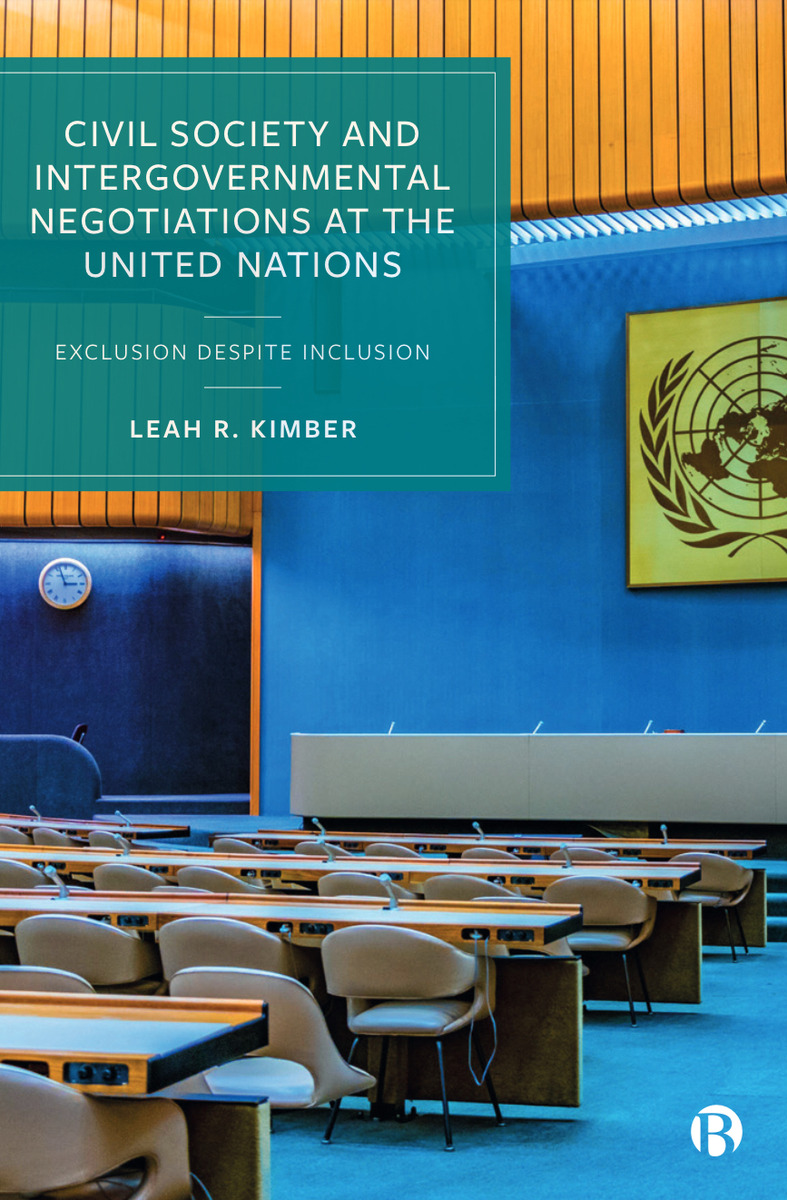
Civil society and intergovernmental negotiations at the United Nations : Exclusion despite inclusion
| ประเภท | เลขเรียก | สถานที่ | สถานะ | |
|
E-BOOK |
อีบุ๊ก (E-BOOKS) | อ่าน |
| ISBN |
9781529233254 (e-book)
|
| เลขเรียก |
E-BOOK
|
| ผู้แต่ง | |
| ชื่อเรื่อง |
Civil society and intergovernmental negotiations at the United Nations : Exclusion despite inclusion/ Leah R. Kimber
|
| พิมพ์ลักษณ์ |
Bristol : Bristol University Press, 2025.
|
| ลักษณะทางกายภาพ |
xvi, 309 p. : ill., c30 cm.
|
| หมายเหตุ |
Civil society organizations (CSOs) and non-governmental organizations have increased at the United Nations (UN) since the 1990s. Yet few studies discuss the notion of inclusion and what it entails in intergovernmental negotiations. This book delves into the UN’s relationship with CSOs, exploring who participates in negotiations and how their input is integrated into ratified documents. Drawing on ethnographic research, the author uncovers the complexities of accreditation, participation, and the interpretation of CSOs’ contributions. Offering a sociological analysis, she highlights the increased exclusion of CSOs despite their apparent inclusion in institutions of global governance unbounded to public accountability. Leah R. Kimber examines the practices of exclusion CSOs are subjected to in UN negotiations by opening the machinery of intergovernmental negotiations in light of the UN’s future and legitimacy.
|
| หัวเรื่อง | |
| หัวเรื่อง | |
| หัวเรื่อง | |
| หัวเรื่อง | |
| หัวเรื่อง | |
| หัวเรื่อง | |
| เชื่อมโยง |
| LEADER : 00000nab 2200000uu 4500 |
| 001 14359 |
| 003 NHRC |
| 008 250721s2025||||uk0000engd |
| 020 ^a9781529233254 (e-book) |
| 099 ^aE-BOOK |
| 100 1 ^aKimber, Leah R. |
| 245 00^aCivil society and intergovernmental negotiations at the United Nations :^bExclusion despite inclusion/^cLeah R. Kimber |
| 260 ^aBristol :^bBristol University Press, ^c2025. |
| 300 ^axvi, 309 p. :^bill., c30 cm. |
| 520 ^aCivil society organizations (CSOs) and non-governmental organizations have increased at the United Nations (UN) since the 1990s. Yet few studies discuss the notion of inclusion and what it entails in intergovernmental negotiations. This book delves into the UN’s relationship with CSOs, exploring who participates in negotiations and how their input is integrated into ratified documents. Drawing on ethnographic research, the author uncovers the complexities of accreditation, participation, and the interpretation of CSOs’ contributions. Offering a sociological analysis, she highlights the increased exclusion of CSOs despite their apparent inclusion in institutions of global governance unbounded to public accountability. Leah R. Kimber examines the practices of exclusion CSOs are subjected to in UN negotiations by opening the machinery of intergovernmental negotiations in light of the UN’s future and legitimacy. |
| 610 20^aUnited Nations |
|
650 0^aInternational relations 650 0^aInternational institutions 650 0^aHuman rights 650 0^aNon-governmental organizations 650 0^aCivil Society |
| 653 0^aE-BOOKS |
| 856 40^zE-BOOK^uhttps://library.oapen.org/viewer/web/viewer.html?file=/bitstream/handle/20.500.12657/96882/9781529233254.pdf?sequence=1&isAllowed=y |
| 917 ^aGift :^c200 |
| 955 ^aE-BOOK |
| 999 ^anopparat |


ก่อนเพิ่มแท็กหรือแสดงความคิดเห็น